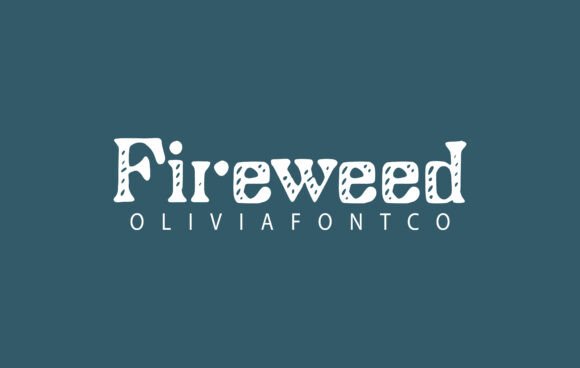
Fireweed Font Review: A Handwritten Script That Elevates Small Business Branding
Last month, I watched a friend of mine—a candlemaker who pours every batch in her tiny kitchen studio—spend an entire afternoon agonizing over a jar label. She had the perfect soy wax blend, the ideal fragrance oil ratio, and a packaging concept that felt deeply personal. But the font she was using? It looked like it had been pulled from a generic template circa 2012. The labels worked, technically, but they didn’t feel like her. That’s when I pulled up a folder of handwritten typefaces I’ve been testing, and I dropped Fireweed into her mockup. She went quiet for a second, then said, “That’s it. That’s the one.”
Fireweed is an authentic handwritten font with a romantic touch. It's part of the Script Amp collection, and it sits squarely in the premium fonts category—but don’t let the word “premium” intimidate you. This is a working font, made for real products, real menus, real packaging, and real small business owners who want their brand to feel intentional without hiring a full design studio.
In this relaxed review, I’m going to walk you through what Fireweed actually looks like on customer-facing materials, where it shines, where to use it wisely, and how it can help your business look more polished, consistent, and genuinely memorable.
What Fireweed Brings to Your Brand’s First Impression
Typography is the very first thing a customer notices, even if they don’t have the vocabulary to describe it. Before they read a single word on your label or your Instagram post, they absorb the mood of your typeface. A stiff, rigid font says one thing. A hurried, scrawled font says another. Fireweed lands somewhere beautifully in between—it feels handwritten without being messy, and romantic without being fussy.
The letterforms in this typeface have a natural flow that mimics real hand lettering. There’s a gentle bounce to the baseline, subtle variation in stroke weight, and little flourishes that catch the eye without overwhelming the text. This isn’t a font that screams for attention; it invites the reader in. For a small business owner, that warm, approachable quality is gold. It makes your product feel like it was made by a real person, not a factory.
I’ve tested Fireweed on everything from candle labels to thank-you cards, and it consistently delivers that “someone cared about this” feeling. That’s the kind of first impression that turns a one-time buyer into a repeat customer.
Real Places Fireweed Works Beautifully in a Small Business
Let’s talk about actual applications. I’ve seen Fireweed used across several different types of businesses, and the results vary in smart ways depending on how the font is deployed.
Product Labels and Packaging — This is where Fireweed really earns its keep. On a small skincare jar or a boutique candle tin, the handwritten quality reads as personal and artisanal. A bakery owner might use it for the main product name on a cake box, paired with a clean sans serif font for ingredients or net weight. The contrast helps the handwritten feel stand out while keeping the practical information easy to read. On a 2-inch label, the font remains legible as long as the text is kept to a short phrase or product name. Longer sentences on tiny labels can get crowded, so reserve Fireweed for the headline.
Business Cards and Thank-You Cards — If you handwrite your thank-you cards, you already know the power of a personal touch. Fireweed lets you extend that same feeling to your printed materials. I’ve seen a boutique owner use it for the shop name on a business card, with a simple serif font for contact details. The card felt warm and high-end without being expensive. For a small batch of printed thank-you cards, Fireweed as the main greeting text makes each card feel like it was written just for the recipient.
Menus and Flyers — A café or coffee shop refreshing its menu will find Fireweed useful for section headers or the establishment name. It adds character to an otherwise utilitarian document. For a flyer promoting a weekend special, the font works beautifully in the headline. Keep the body text in a neutral, readable companion font so customers can actually scan the information quickly.
Social Media Graphics and Online Shop Banners — In the digital space, Fireweed holds up well on Instagram posts, story highlights, and Etsy banners. The romantic, flowing style catches the thumb-scrolling eye. I’ve used it myself for a limited-edition product announcement graphic, and the engagement on that post was noticeably warmer than previous ones. The font seems to resonate with audiences who value handmade and thoughtful design.
Logo Design — Fireweed can absolutely serve as a standalone logo display font for a brand that wants a handwritten, personal identity. It works especially well for creatives, wedding vendors, florists, bakers, and artisans. If you’re a coach or consultant in a more formal industry, you might use it as an accent element rather than the full logo—maybe for a tagline or a decorative initial.
How Fireweed Helps Build a Trustworthy, Recognizable Brand
Consistency is the secret weapon of any memorable small business. When your packaging, your website, your social media, and your printed materials all share a cohesive visual language, customers start to recognize you before they even see your name. Fireweed can be the thread that ties everything together.
I’ve worked with a soap maker who was using three different fonts across her labels, her website, and her Instagram templates. The brand felt fragmented. We introduced Fireweed as the primary display handwritten font for product names and taglines, and paired it with one simple sans serif font for everything else. Suddenly, her shop looked intentional. Customers started commenting on how “put together” her products looked. She didn’t change her formula or her packaging photos—she just made her typography consistent.
Typography also affects trust. A font that feels rushed or poorly spaced can subconsciously signal that the product itself might be careless. Fireweed’s thoughtful letterforms and even rhythm communicate care and professionalism. That’s especially important for small businesses competing with bigger brands. You might not have a huge marketing budget, but you can still look polished and trustworthy with the right design assets.
Readability and Practical Advice for Using Fireweed
No matter how beautiful a font is, if your customer can’t read it, the design has failed. Fireweed is a script font, and script fonts naturally require a bit of consideration when it comes to readability.
For packaging design, use Fireweed for short, impactful text—product names, brand names, short taglines, or numbered editions. Avoid long ingredient lists or paragraphs in this font. On a 4-ounce candle jar, the product name in Fireweed will look gorgeous. The scent notes and burn time should be in a clean companion sans serif font like Montserrat, Lato, or Open Sans. On product mockups for your online shop, keep the same hierarchy.
For social media graphics, Fireweed works well as the headline text on a vertical Instagram post or a Pinterest pin. Test it at small sizes—if the text gets smaller than about 24 points on a mobile screen, consider switching to a simpler serif font for that specific use. Always preview your graphics on an actual phone before publishing.
For menus and flyers, use Fireweed for the menu title or section headers. The body text should be in a highly readable modern typography choice. This keeps the design interesting without frustrating customers who are trying to order.
Simple Font Pairing Ideas That Work with Fireweed
You don’t need to be a trained designer to pair fonts well. The general rule is contrast: pair a decorative script with a simple, neutral partner. Here are a few combinations I’ve tested with Fireweed in real branding projects:
- Fireweed + Montserrat (sans serif): A classic pairing. The clean, geometric lines of Montserrat balance Fireweed’s organic flow. Great for labels, business cards, and website banners.
- Fireweed + Playfair Display (serif): This combo leans elegant and editorial. Use it for a boutique brand, a wedding vendor, or a beauty product line. The contrast between the handwritten script and the refined serif is striking.
- Fireweed + Lato (sans serif): Lato is warm and approachable without being decorative. It lets Fireweed take the spotlight while keeping all your practical text highly readable.
- Fireweed + Cormorant Garamond (serif): For a more literary, vintage feel. This pairing works beautifully on bookish brands, stationery shops, and artisan food packaging.
When you’re working on editorial design or a multi-page menu, stick to two fonts maximum. Fireweed as the display voice and one clean partner for everything else. That keeps your brand identity tight and professional.
What to Check Before You Use Fireweed Commercially
Before you put Fireweed on your product labels, your shop banner, or your client’s packaging, take a few minutes to review the included files and licensing. This font is part of the Script Amp collection, and like any quality commercial font, it comes with specific usage rights.
Check the font package for available weights, alternate characters, and ligatures. Many handwritten fonts include stylistic alternates that let you customize the look—swapping a standard letter for a more flourished version. These details are what make the font feel truly bespoke. If Fireweed includes multiple alternates, experiment with them in your logo design to create a unique lockup that no one else will have.
Also verify multilingual support if your brand serves customers in different languages. Some script fonts have limited character sets, so confirm that the font covers the letters and accents you need.
Finally, always read the commercial font licensing agreement carefully. If you’re using Fireweed for products, packaging, merchandise, client work, or digital downloads, make sure your license covers those specific use cases. A standard desktop license might not extend to merchandise you sell, or to templates you offer for download. Investing in the correct license upfront saves you legal headaches down the road.
A Font That Makes Your Business Feel More Like You
At the end of the day, Fireweed is more than a pretty display font. It’s a tool that helps small business owners close the gap between how they see their brand and how customers experience it. Whether you’re updating your product labels, refreshing your café menu, printing thank-you cards for Etsy orders, or building a consistent look across your Instagram templates, this creative font brings warmth, personality, and a professional touch.
The candlemaker I mentioned earlier? She redesigned her entire packaging line using Fireweed for the product names and a simple sans serif for the details. Her sales didn’t magically double overnight, but customers started sending her messages saying, “Your labels are so beautiful, I almost don’t want to burn the candle.” That’s the kind of feedback that tells you your typography is working. Fireweed helped her brand feel like her—and that’s the whole point.